US buyer use cases

Running Socks Supplier Requirements by Channel and Intended Use

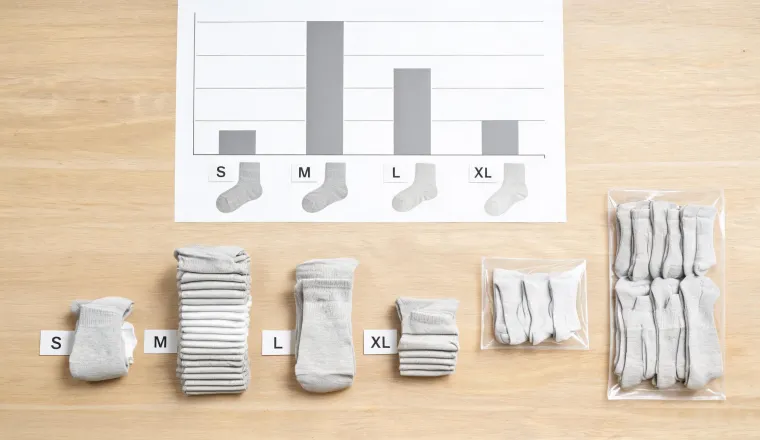
A retail buyer, event organizer and private-label distributor may request the same sock height but require different size ratios, labels, approval gates and packing. This page maps those differences into RFQ questions without promising a performance result.

Retail running socks range planning
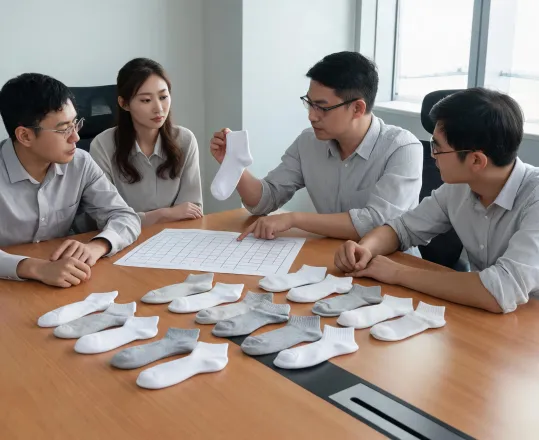
Club running sock sample review

Independent sourcing support does not replace the buyer's product, labeling, fit or regulatory review.

Application decision tree

Route the brief through three decisions

1

Where will it sell or be used?

Retail: define shelf pack, labeling, colorway count and replenishment reference. Club or event: define athlete sizing, artwork approval and date constraints. Corporate program: define brand guide, recipient profile and distribution pack.

2

What construction matters?

Specify height, fiber composition or acceptable blend range, cushioning position, ventilation zones, arch or cuff construction, toe seam expectation and size system. “High performance” alone cannot be quoted consistently.

3

What is the order objective?

Separate a first sample round, a pilot quantity and a production order. Give pair quantities by size and color, then state whether the budget is per pair or for the complete order in a named currency.

Traceability chain

Link every decision to a revision

This chain is a review method, not proof that a check has already been completed.

Specification

Buyer revision lists material, construction, sizes, artwork and packaging.

Buyer-controlled

Quotation

Supplier response identifies offered scope, assumptions, MOQ and exclusions.

Supplier-confirmed

Sample

Named sample is checked against measurement, fit and appearance notes.

Approval pending

Order

Final revision, quantity allocation, terms and shipment documents are recorded.

Order-specific
Trade-off 1: broader fiber flexibility may help supplier selection but reduces control unless acceptable ranges are written. Trade-off 2: fewer sizes simplify pack planning but may not fit the intended user group; request the proposed size chart rather than assuming equivalence.
  1. Choose the buyer channel and intended running use.
  2. List construction, size and artwork decisions.
  3. Allocate pairs by variant and define the pack basis.
  4. Request quotation assumptions and exact-item evidence.
Please enter your name.
Please enter a valid email.
Please enter your company.
Please describe the product and quantity.
Consent is required.